
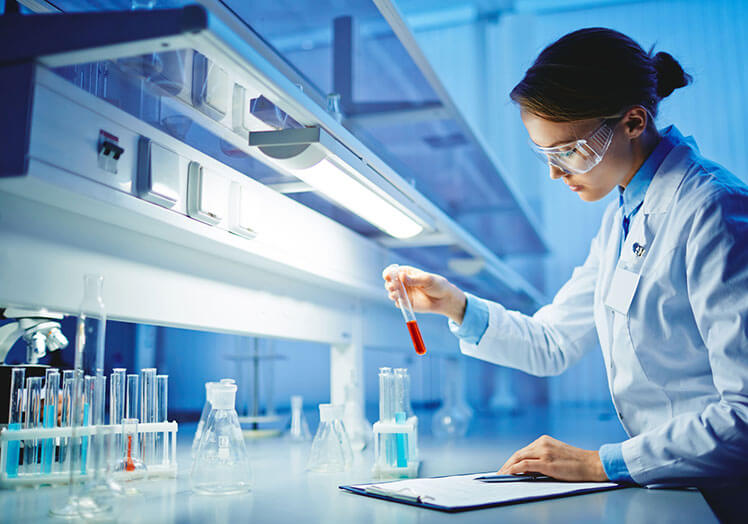
Pharmaceutics is the branch of pharmacy that deals with all aspects of the process of transforming new chemicals into drugs that can be used safely and effectively by patients. It's the science of formulation design. With all the necessary infrastructure facilities and an experienced faculty, the Department of Pharmaceutics is active in teaching and researching various specialties of pharmacy, including pharmaceutical technology, biopharmacy, pharmacokinetics, physical pharmacy, industrial pharmacy, and drug delivery systems are working on it.
The Pharmacognosy Department is dedicated to the study of natural medicine and traditional Chinese medicine in pharmacy. This department is engaged in the biology, chemistry, biochemistry, taxonomy and ethno biology of natural products derived from plants, animals, marine and other life sources. We use a multifaceted approach to distinguish, analyze, and purify multi-component mixtures from plant, fungal, or marine sources, with a focus on characterizing their bioactive secondary metabolites.
The field of pharmacology is concerned with the study of drug mechanisms of action, therapeutic effects, side effects, and drug interactions. The Department of Pharmacology provides a flush and dynamic environment for conducting quality research and teaching. Students enrolled in an undergraduate program are taught by a department during a four-year study period. The laboratory includes a digital video tracking system, mating field, digital plethysmometer, clinical biochemical analyzer, digital catalepsy rod device, digital actotometer, rotarod device, maze (increasing plus maze, Y maze, radial arm labyrinth), an electroconvulsive meter, a digital analgesic meter, and other routinely necessary equipment such as a student's digital organ bath and kymograph to provide students with hands-on experience in preclinical research.
Pharmaceutical chemistry is an interdisciplinary subjecct concerned with the design, amalgamation, identification, development, and analysis of new chemical entities (NCEs). This research will help us understand the mechanism of action of drugs at the molecular level. We use state-of-the-art approaches such as quantitative structure-activity relationships, computer-aided drug design, high-performance liquid chromatography, gas chromatography, UV spectroscopy, and infrared spectroscopy to study the chemical properties of drugs. Students are well prepared for the application of the latest information and science in drug development, safety and efficacy research. It has the necessary facilities and instruments for various chemical aspects of pharmaceuticals, including physical, analytical, organic, inorganic, biochemical and medical. There are well-equipped laboratories for undergraduate students and laboratories for doctoral students. Highly qualified and experienced staff is the highlight of this department.